Gallery 01c. 8000 BCE
Domestication in the Andes
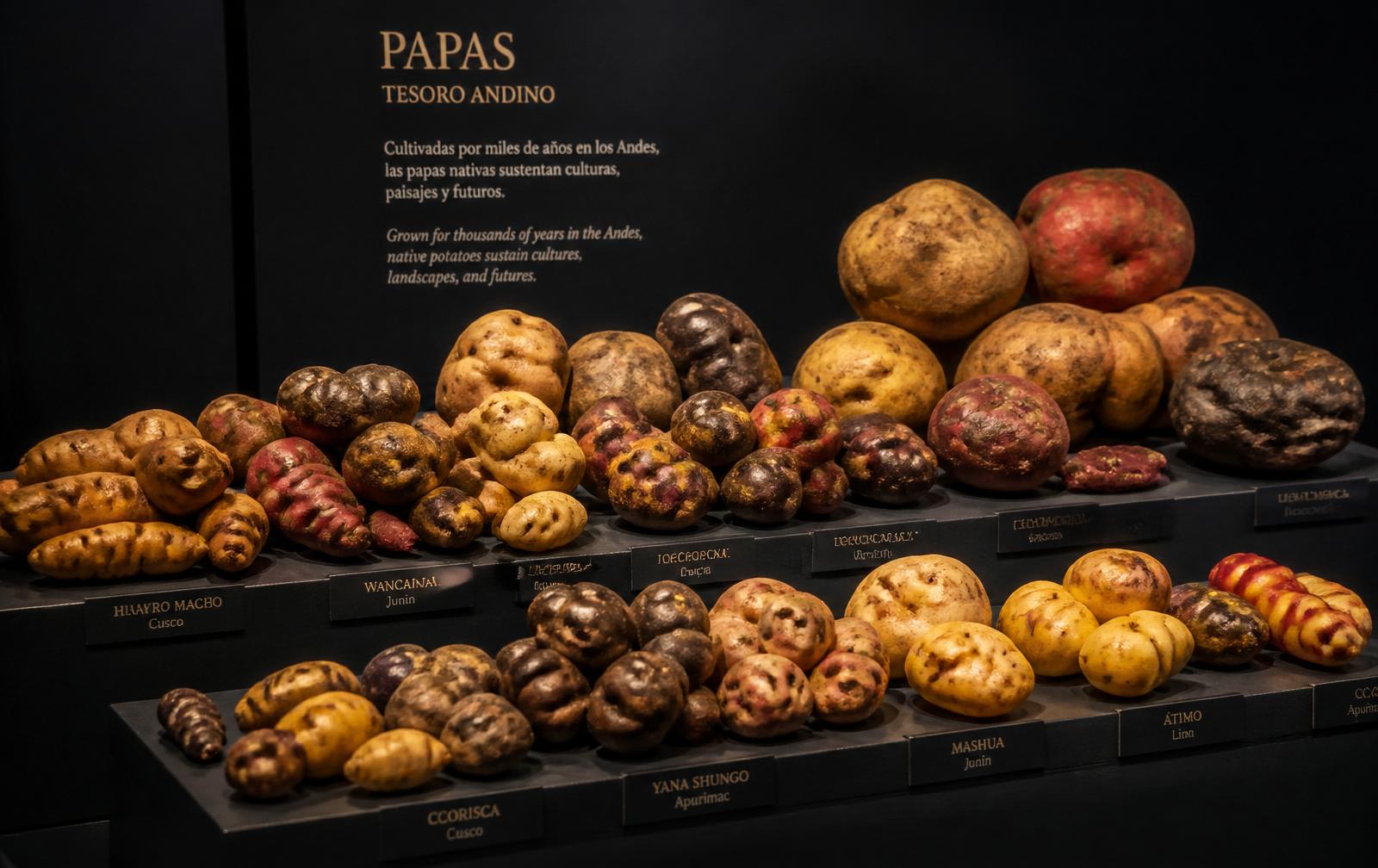
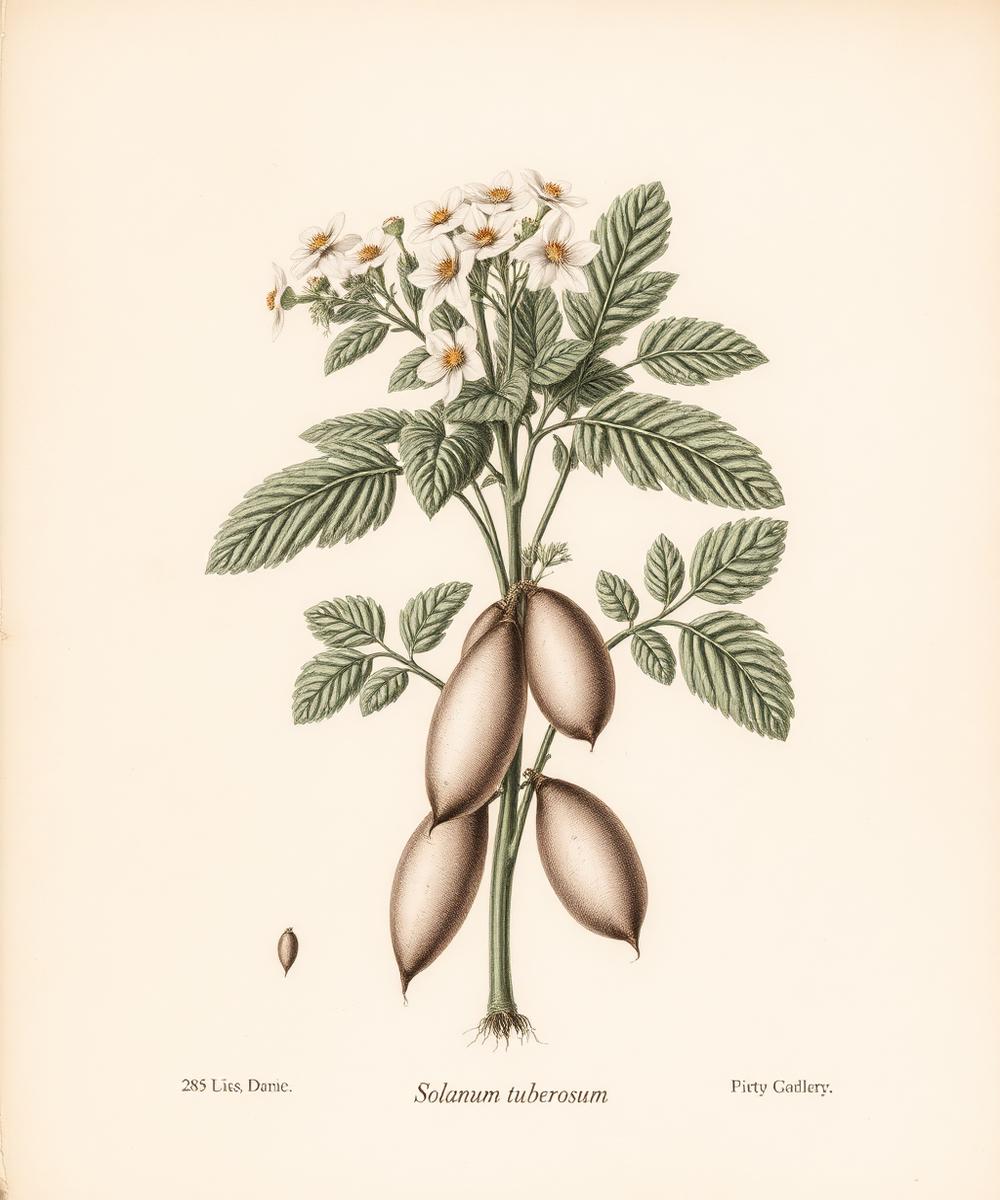
Potatoes were first domesticated by peoples of the Andes, in the area of modern-day southern Peru and northwestern Bolivia, between roughly 8000 and 5000 BCE. All cultivated potatoes descend from a single species complex, Solanum tuberosum, with thousands of landraces still grown across the highlands.
Source · Wikipedia: Potato; International Potato Center (CIP)
Gallery 02c. 1200–1532
Chuño and the Inca Storehouse
Andean farmers freeze-dried tubers into chuño using cold nights and strong daytime sun. Stored in state qollqa warehouses, this lightweight, near-imperishable food helped sustain Inca armies and administration across steep, variable terrain.
Source · Wikipedia: Chuño; FAO
Gallery 031532–1600
The Columbian Exchange
Spanish encounters with the Inca brought the potato to Europe in the second half of the 16th century, first recorded in the Canary Islands in 1567 and in mainland Spain shortly after. It travelled onward as ship provisions and curiosity crop before it was ever a staple.
Source · Wikipedia: History of the potato
Gallery 041700–1840
Suspicion, then Staple
Long distrusted in Europe as a nightshade, the potato was promoted by advocates such as Antoine-Augustin Parmentier in France and by rulers including Frederick the Great in Prussia. Its high calorie yield per hectare made it central to population growth across northern Europe.
Source · Wikipedia: Antoine-Augustin Parmentier
Gallery 051845–1852
Blight and the Great Famine
The oomycete Phytophthora infestans destroyed potato crops across Europe. In Ireland, where a narrow genetic base and dependence on the Lumper variety met colonial land policy, roughly one million people died and a million more emigrated — a lesson in monoculture risk.
Source · Wikipedia: Great Famine (Ireland)
Gallery 061971–today
The Global Fourth Crop
The International Potato Center in Lima conserves more than 4,500 potato varieties. The potato is now the world's fourth-largest food crop after rice, wheat and maize, with China and India the leading producers, and it was carried to the ISS in 1995 as the first tuber grown in space.
Source · FAO; International Potato Center; NASA